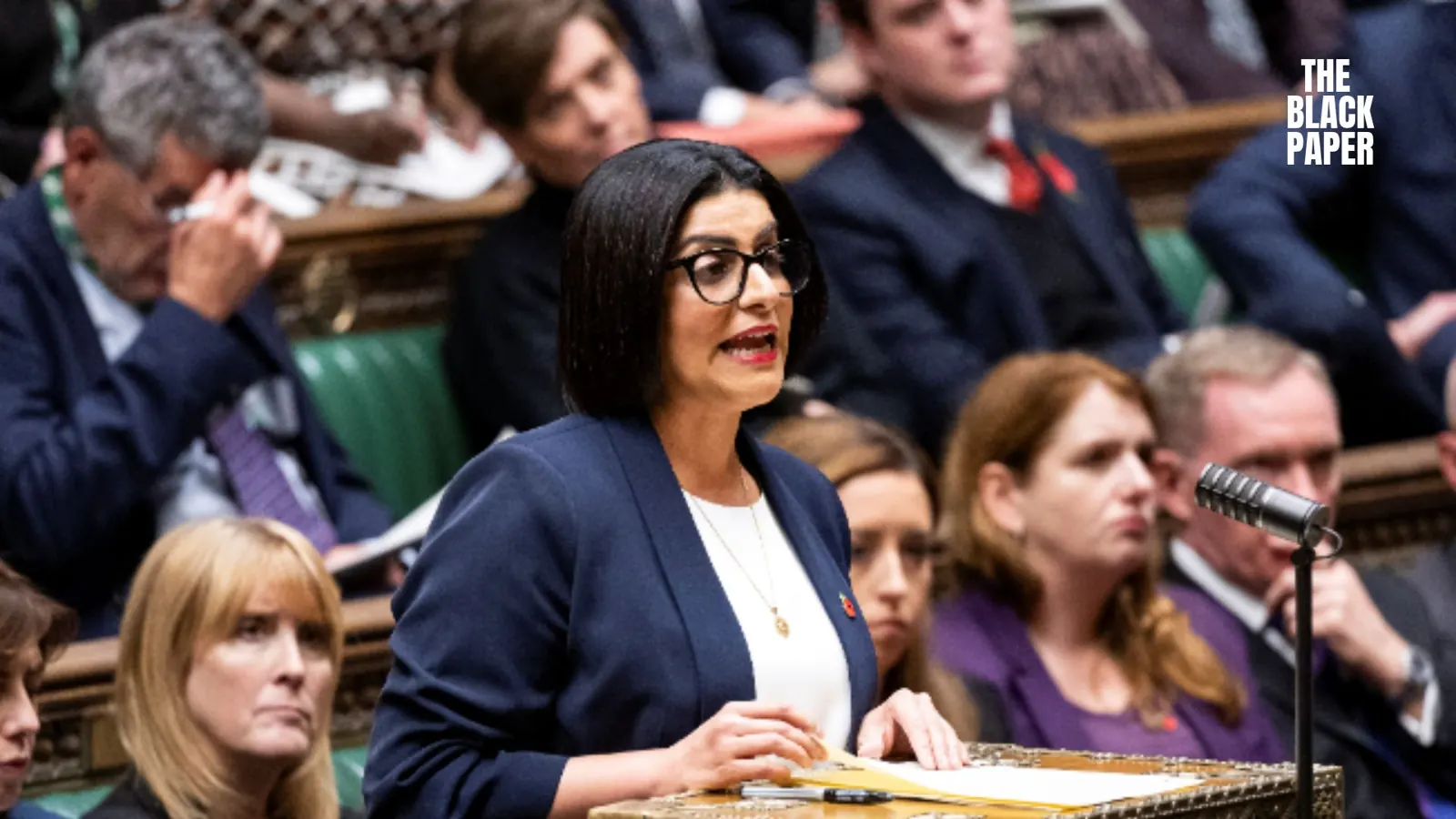
Welcome to this week’s edition of The Black Paper. In this issue, we delve into the recent announcement by Home Secretary Shabana Mahmood regarding immigration policies that have stirred significant debate within our communities.
The announcement and its fallout
The new policy, which proposes to double the qualifying period for indefinite leave to remain from five to ten years, has not gone unnoticed. Ndukwe highlights the palpable anxiety this change has generated:
“People were left on the fence without an opinion… I’m going to stop supporting Labour, I’m going to the Greens or to the Lib Dems.”
Ndukwe Onuoha
This sentiment reflects a broader discontent among migrants who feel their contributions and sacrifices are undervalued.
Community reactions
Cheta elaborates on the implications of the proposed changes, emphasising that they create a two-tier system that disproportionately affects minority communities:
“This whole earned settlement nonsense is not neutral. It disproportionately affects minority communities — South Asian, African, and Caribbean — because they are more likely to be in lower-paid roles.”
Cheta Nwanze
Such statements resonate deeply, underscoring the frustration many feel about being treated as mere economic statistics.
The human cost
The conversation takes a more personal turn as Ndukwe reflects on the impact of these policies on families:
“The singularly cruel thing about this argument is treating people as figures on a spreadsheet.”
Ndukwe Onuoha
This perspective challenges us to remember that behind every statistic is a story, a life impacted by the decisions made at the policy level.
Looking ahead
As we navigate these turbulent waters, it is crucial to engage in these discussions — not just to voice our concerns, but to advocate for policies that honour the contributions of all members of our community. Both speakers leave us with a call to action: to consider the humanity behind the headlines and to push against policies that perpetuate inequality.
Reflecting on these insights, we invite you to listen to the full episode for a deeper understanding of the issues at play. Ultimately, it is about more than just policy; it is about the people affected by these decisions.